
When measuring ductwork insulation, it is easy to overlook critical details that can ultimately cost you both time and money. Many estimators tend to underestimate duct dimensions or neglect to consider bends and turns, which can lead to inaccurate assessments.
Failing to account for material properties and thermal resistance values is another common error. A lack of attention can result in significant miscalculations regarding labour and material costs.
By understanding the top mistakes to avoid, you can help ensure that your project runs smoothly and remains within budget. Stay focused on accurate measurements and detailed assessments to optimise your insulation efforts and enhance overall efficiency.
Key Takeaways
Top Mistakes Estimators Make When Measuring Ductwork Insulation
- Underestimating duct dimensions can lead to costly errors arising from inaccuracies in initial measurements.
- Failing to verify measurements may result in substantial material waste and delays in project timelines.
- Disregarding the effects of duct shapes and configurations can negatively impact insulation efficiency and overall energy performance.
- Neglecting to factor in insulation thickness when measuring duct dimensions may result in erroneous calculations of thermal resistance.
- Overlooking the costs associated with labour and materials in project budgeting can cause unforeseen financial challenges during installation.
Understanding Accurate Ductwork Insulation Measurements
When it comes to measuring ductwork insulation, getting accurate readings is crucial for energy efficiency and comfort in your space. To ensure you’re part of a community that values precise heating and cooling, you need to familiarize yourself with effective measurement techniques.
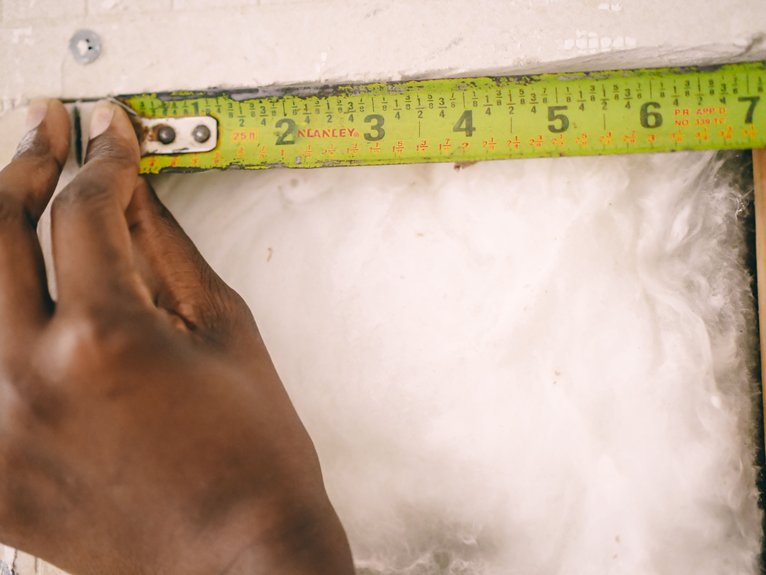
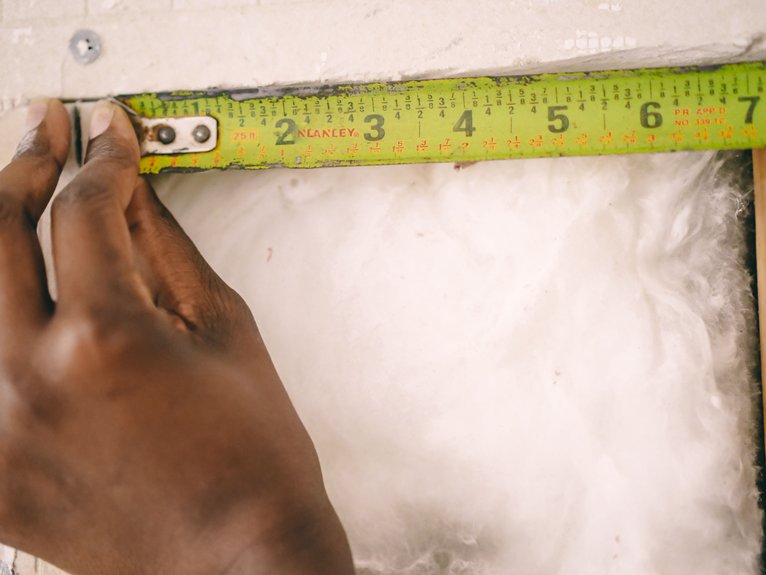
Start by checking your insulation materials for their R-values, which signify thermal resistance. Using a tape measure, determine the dimensions of your ducts accurately, and factor in the insulation’s thickness.
Avoid common pitfalls by double-checking your numbers and considering the type of insulation you’re using—some are more efficient than others.
By mastering these techniques, you’ll contribute to a more comfortable, energy-efficient environment and feel more connected to others who share similar goals.
Common Mistakes: Underestimating Ductwork Dimensions
One of the most common mistakes people make in measuring ductwork insulation is underestimating the dimensions of their ducts. When you’re keen to ensure efficiency, it’s easy to overlook critical details.
Accurate measurements are vital, and using proper measuring techniques that align with industry standards can save you from costly errors.
Here are three things to keep in mind:
- Always double-check your measurements—one mistake can lead to significant wastage.
- Consider the entire duct route—don’t just measure the straight sections; include bends and turns.
- Account for slight variations—ducts may not always be perfectly straight or uniform, so be prepared for adjustments.
Don’t Overlook Material Properties and R-Values
While selecting insulation materials, you can’t afford to overlook their properties and R-values. These factors are crucial for ensuring your ductwork’s thermal performance.
Think about how different materials will influence energy efficiency and comfort in the spaces you’re working with. Choosing the right material isn’t just about cost; it’s about long-term benefits. Higher R-values mean better insulation, which translates to reduced energy bills and happier occupants.
You’re part of a community that values sustainability and efficiency, so your material selection should reflect that commitment.
Don’t be swayed by flashy marketing claims; dig deeper into the specifications. Connect with other estimators and share insights on their experiences with various materials. This collaboration will enhance your understanding, helping you make informed choices that resonate with everyone involved.
Neglecting the Impact of Duct Shapes and Configurations on Insulation
If you ignore how duct shapes and configurations affect insulation, you could compromise your system’s efficiency. Understanding these nuances is crucial for optimal insulation performance and helping your clients achieve comfortable indoor environments.
Consider these three important points:
- Round vs. Square Ducts: Round ducts generally allow for better airflow and less resistance, enhancing insulation efficiency.
- Elbows and Turns: More bends and turns can create airflow turbulence, leading to energy loss— an aspect often neglected when measuring insulation.
- Duct Length: Longer ducts require more insulation to maintain efficiency; overlooking this can lead to significant performance drops.
Don’t Let Labor and Material Costs Catch You Off Guard!
When measuring ductwork insulation, it’s crucial not to overlook labor and material costs, as they can significantly impact your overall budget.
You want to be part of a team that excels in budget forecasting and cost analysis, ensuring your project doesn’t go off track financially.
Take the time to accurately assess both direct and indirect costs associated with insulation installation. This includes labor, which often exceeds initial estimates if you’re unprepared.
Conclusion
In conclusion, avoiding common measurement mistakes in ductwork insulation is essential for the success of your project. By accurately assessing dimensions, understanding material properties, considering different duct shapes, and factoring in both labour and material costs, you can prevent costly oversights.
Always double-check your work and stay informed about industry best practices. Mastering these elements not only ensures energy efficiency but also enhances comfort in your conditioned spaces, leading to satisfied clients and successful projects.
Being diligent in your measurements and knowledgeable about insulation techniques can make all the difference in the effectiveness of your work. Take pride in your accuracy and commitment to quality, as this will reflect positively in your professional reputation.